Recruits often imagine sirens and heroics. In reality, the first hurdles in firefighter training are sweat, precision and calm thinking under pressure. From day one, you face time limits, strict technique checks and real heat. Because these tests save lives, the standards are firm and fair.
If you want a clear view of how skills are built for Malaysian industries and facilities, explore ASEC’s structured pathways inside its Firefighting Training catalogue. Every drill has a purpose and every pass mark connects to real incidents on our roads, in our high rises and at our plants.
Strength, Stamina and Heat: What Your Body Must Provide
To succeed in firefighter training, your body must work like a reliable tool. You learn to move with a load, breathe steadily in hot gear and keep balance on stairs. These checks match real callouts in Malaysia, where humidity, high temperatures and multi-storey buildings increase stress on the heart and lungs (Samsudin, 2021).
You also practise safe pacing. Even strong rookies can burn out early. Trainers watch your form, not just your finish time. Good habits protect you, your crew and the public.
The load-bearing circuit: pace, form, finish
Recruits carry hose packs, drag a rescue dummy and climb stairs in turn. Assessors look for:
- Keep a steady pace that you can hold for the whole circuit
- Use legs and core to protect your back during lifts
- Control your breathing before, during and after each station
- These simple points decide whether you pass. The circuit mirrors real routes from pump to fire floor and back again.
Heat acclimatisation: working smart in full gear
Two short minutes of effort can feel long in bunker gear. You learn micro rests, water discipline and glove-friendly movements. Trainers show how a small technique change, like clipping a tool before moving, saves seconds and energy. In firefighter training, smart habits beat brute force, especially in hot Malaysian weather.
Fire Behaviour and Live-Fire Drills: Read the Flame, Act with Care
Understanding fire is central to firefighter training. You study how smoke moves, how heat collects at ceilings and why doors must be controlled. These lessons explain why a safe entry takes planning, not rushing.
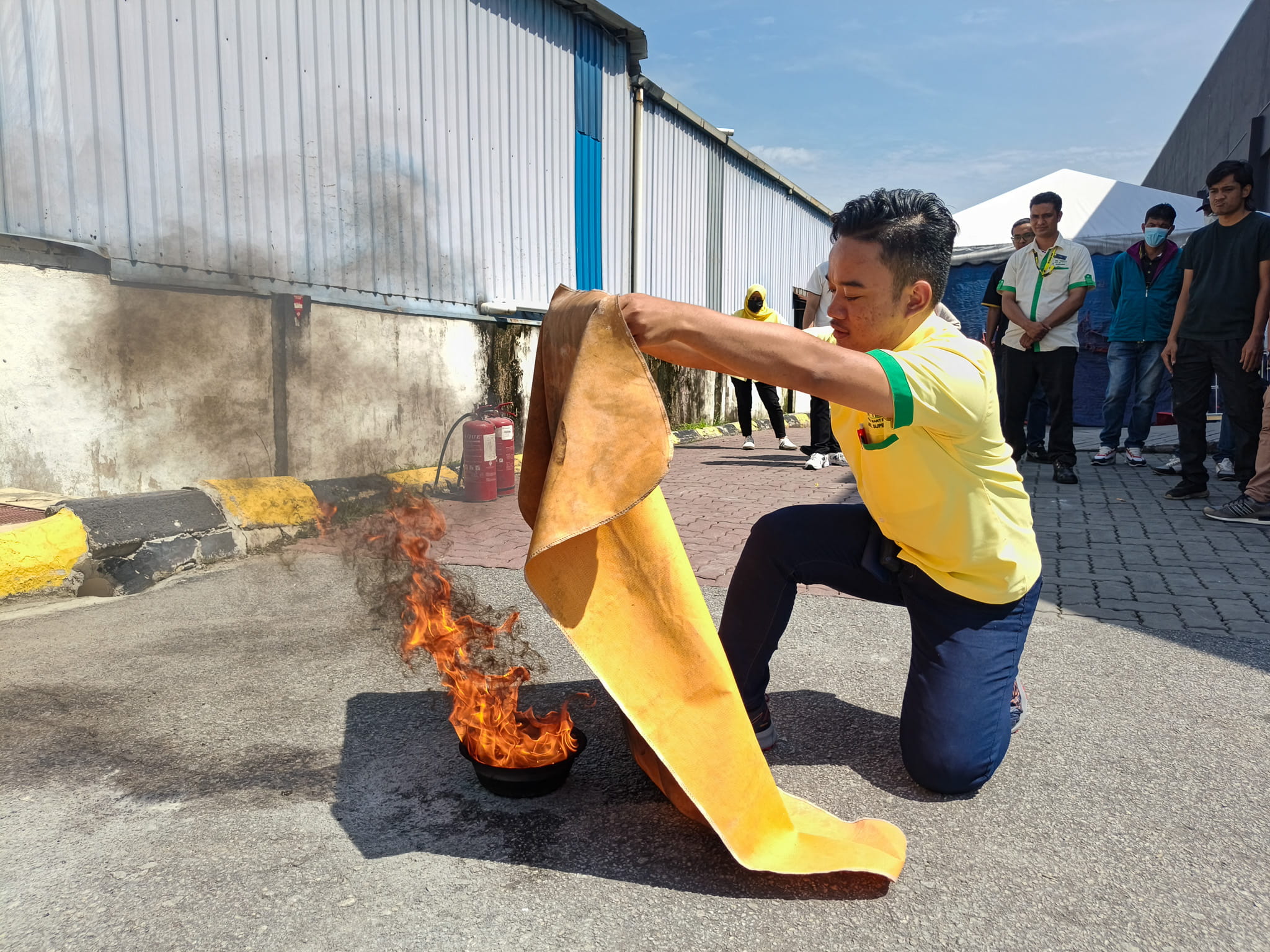
During live-fire evolutions, you practise hose handling, pulsing water and searching rooms with low visibility. You pass when you act with control and communicate clearly.
Door control and entry: little steps, big safety
You and your partner check the door temperature, open it slightly to vent smoke and keep the door in hand. This slows flashover risk and protects anyone inside. The drill feels slow at first, but it is faster than a bad entry that goes wrong.
Live-fire attack: move, cool, advance
Inside the container, you work in pairs. One cools overhead gases; one scans and advances. You move in short, safe bursts, then check conditions again. In firefighter training, this is a core test: keep your line tidy, protect your partner and talk in short, clear words that cut through noise.
Technical Tools, New Risks and Rescue Thinking
Modern incidents include batteries, chemicals and confined spaces. Good firefighter training teaches tool mastery before speed. You learn why a proper knot or a clean coupling makes the rest of a rescue smoother.
Because electric vehicles are growing fast in Malaysia, understanding battery fires is vital. To build that skill, ASEC offers focused modules such as Electric Vehicle (EV) Response Training, which tie global best practices to local infrastructure.
Search and rescue basics: system before sprint
You practise right-hand or left-hand searches, mark rooms and keep track of your crew. Slow is smooth and smooth becomes fast. Assessors check whether you cover space methodically, not whether you sprint.
Battery and electrical hazards: respect the energy
Lithium-ion systems behave differently from wood or fuel fires. You learn cooling tactics, isolation steps and cordon decisions (Factual Mutual, 2024). For national context and safety updates, follow Malaysia’s Fire and Rescue Department resources at the official Bomba portal. Good firefighter training links these standards to the tools you carry.
Teamwork, Communication and Leadership Under Pressure
A strong team makes firefighting safer and faster. During firefighter training, recruits learn that talking clearly and following the chain of command can save precious seconds. In real Malaysian workplaces or industrial zones, teamwork ensures every role, from pump operator to entry team, runs smoothly.
ASEC includes structured teamwork modules, preparing rookies for both coordination and quick decision-making that complies with the Fire Services Act 1988 regarding emergency response (Commissioner of Law Revision, 2006).
Radio and command discipline
Every recruit learns standard radio language and short command words. You practise repeating orders, confirming instructions and reporting changes in conditions. These communication protocols are based on the Incident Command System (ICS) standards used by Malaysian emergency services to ensure interoperability (JBPM, n.d.).
Trust and coordination in real scenarios
During full-drill simulations, teams perform as if on scene: one directs, others execute. Trainers assess your trust in team members and response timing. Building this bond early means smoother teamwork during real emergencies.