Highways are the arteries of Malaysia’s economy, moving thousands of vehicles daily. However, high speeds and heavy traffic increase the risk of severe collisions and vehicle fires. When an accident occurs on an expressway, the initial minutes are critical for survival. This is why professional ert training is a fundamental requirement for highway concessionaires. Having an Emergency Response Team on site ensures that life saving actions begin immediately, often before government fire services can navigate traffic congestion.
The effectiveness of a response is measured by the level of competence shown by the team. By engaging in all training programmes that focus on high pressure environments, responders learn to suppress panic and apply technical protocols. These individuals look past the chaos, identifying urgent threats to life while ensuring the scene remains safe for other road users. This proactive approach reduces the likelihood of secondary accidents, which are common in the wake of a primary collision.
Ultimately, the goal of specialised readiness is to bridge the gap between the moment of impact and the arrival of paramedics. Through rigorous ert training, team members develop the physical stamina and mental clarity needed for vehicle extrication and fire suppression. They serve as a shield for the public, providing professional care in an environment that is often unpredictable and dangerous.
Immediate Fire Suppression and Hazard Control
In the aftermath of a highway incident, the presence of fuel and battery acids creates a volatile environment. Proper ert training equips responders with the knowledge to identify these hazards from a distance and deploy the correct suppression methods. A small engine fire can consume a vehicle in minutes, making immediate intervention the only way to save trapped occupants.
Deployment of Firefighting Equipment
Teams learn to use extinguishers and mobile fire units designed for vehicle fires. This involves understanding wind direction, fuel runoff and the risks of electric vehicles. During advanced firefighting modules, responders practice tackling high intensity blazes while maintaining a safe distance to avoid injury from explosions or toxic fumes.
- Deploy dry chemical extinguishers to to control small fires and reduce flame spread.
- Maintain a safe perimeter to protect bystanders from toxic smoke.
- Cool down surrounding structures to prevent fire spread.
- Identify hazardous material placards to determine the correct protocol.
Securing the Incident Scene
A highway rescue is unique because of the ongoing risk from passing traffic. Responders use their training to establish buffer zones using response vehicles and signage. This protective barrier allows the rescue team to focus entirely on the casualty. Professional safety providers like ASEC highlight their commitment to both casualty care and rescuer safety through their About Us page.
Technical Support and Scene Stabilisation
When vehicles are involved in a collision, occupants may be trapped or injured. However, technical rescue and vehicle extrication are beyond the scope of Emergency Response Teams (ERT) and are handled by specialised authorities such as the Fire and Rescue Department (BOMBA).
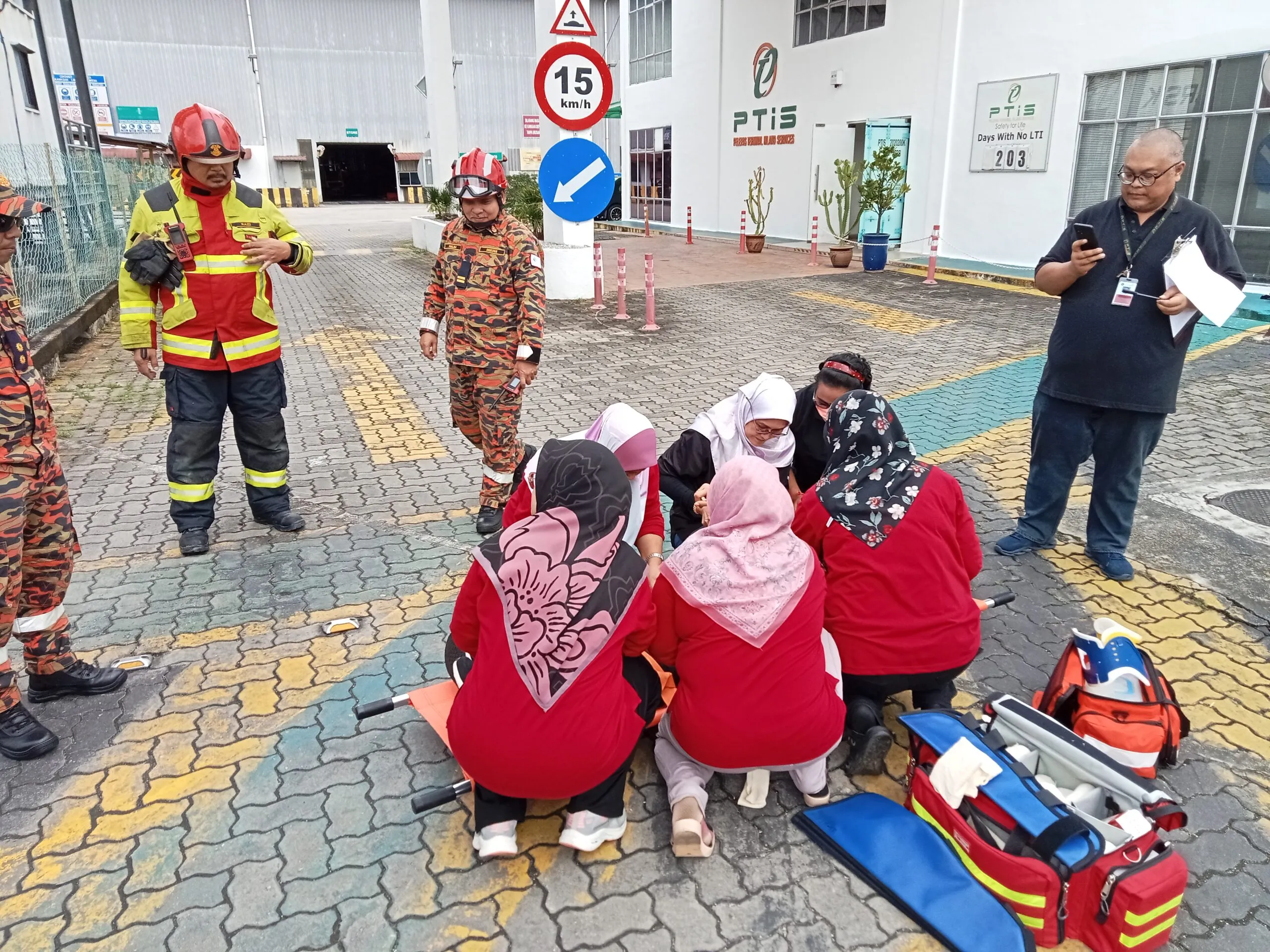
Instead, ERT members are trained to stabilise the situation and support rescue operations until professional responders arrive. Their priority is to ensure the safety of casualties, protect themselves, and prevent further hazards at the scene.
Scene Stabilisation and Initial Support
Before professional rescue teams arrive, ERT members focus on securing the area to prevent additional risks. This is especially important on highways, where ongoing traffic presents a constant danger.
- Establish a safe perimeter to protect casualties and responders
- Control traffic flow where possible using warning signals or vehicles
- Identify potential hazards such as fuel leaks or fire risks
- Provide basic first aid to injured victims within their level of training
- Communicate accurate information to incoming emergency services
Management of Multiple Casualties
Highway accidents often involve multiple vehicles and numerous victims. While ERP training focuses on coordination and emergency response planning, responders develop triage skills through BOFA and AIFA training. This ranked system allows the team to allocate resources where they will have the greatest impact. In a high-stress environment, the ability to categorise patients based on severity is what saves the most lives.
Collaborative Response and Handover Protocols
An Emergency Response Team is rarely the final authority on a scene. Their role is to stabilise the situation until the Fire and Rescue Department (BOMBA) arrives. Effective ert training emphasises the importance of clear communication and the seamless transfer of information to these government agencies.
Communication with Statutory Authorities
Providing an accurate situation report is a skill practised throughout the course. This report includes the number of vehicles, cargo types and the medical status of patients. This clarity allows incoming professional services to prepare while in transit, ensuring no time is wasted upon their arrival at the highway incident.
- Deliver clear verbal briefings to the incoming Incident Commander.
- Provide documentation of any medical interventions or medications given.
- Assist professional fire fighters with hose management or illumination.
- Maintain scene security until the police take over the investigation.
- Participate in post incident debriefs to identify areas for improvement.
Integration of Advanced Life Support
In cases where a victim is in critical condition, the ERT may need to utilise an AED or perform advanced wound care. Their training ensures they can work alongside professional paramedics without causing interference. This collaborative spirit is essential for modern emergency management in Malaysia, where private teams and public services must work as one cohesive unit.
Frequently Asked Questions
Here are common questions about ert training we often receive:
Conclusion
The presence of a prepared Emergency Response Team on our highways is a vital component of national safety. Through specialised ert training, individuals gain the ability to face fire and trauma with a professional approach. Their presence ensures help is just moments away, providing peace of mind to the thousands of Malaysians who travel our expressways every day.
By investing in these skills, organisations are fulfilling more than a legal obligation; they are protecting human lives. According to the Malaysian Institute of Road Safety Research (MIROS), quick post crash care is one of the pillars of road safety. When an ERT is ready to act, survival rates increase significantly, highlighting the long term value of quality instruction.
If you are looking to strengthen your organisation’s response capabilities, the best time to start is now. We invite you to explore our various erp training options to find a programme that fits your needs. Enrolling in ert training today ensures that when the unexpected happens, your team will have the confidence and skill to lead the way to safety.