Why AED Awareness Matters in Workplace First Aid
An AED can support CPR during sudden cardiac emergencies. This guide explains why AED access, awareness and early response matter in workplace first aid readiness.
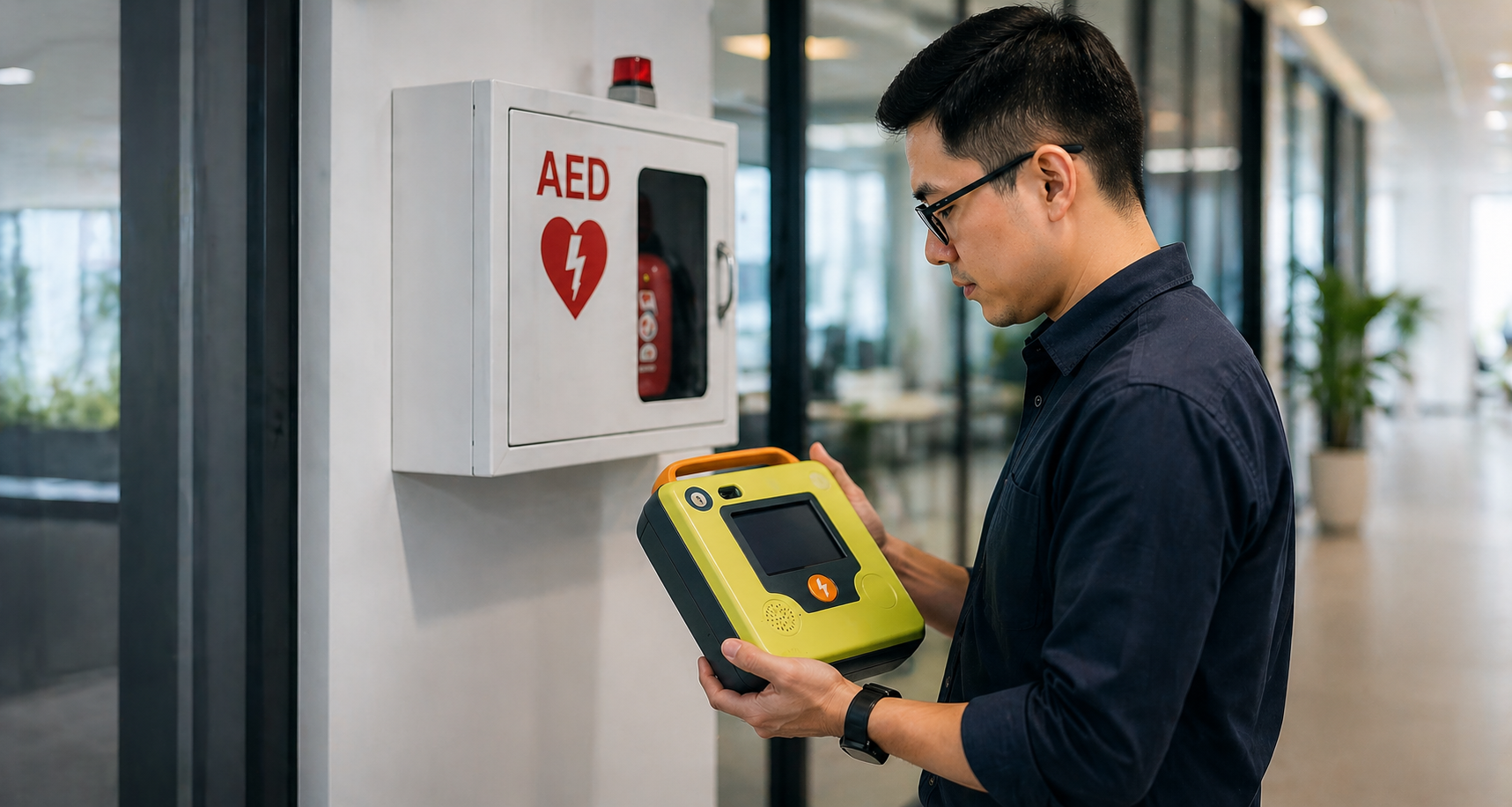
An AED is most effective when people know where it is, when to use it and how it supports CPR during a sudden cardiac emergency.
What an AED helps responders do.
An AED is designed to guide responders during a sudden cardiac emergency and support CPR when immediate action is needed.
Checks the heart rhythm
The AED analyses the casualty’s heart rhythm and determines whether a shock is advised.
Gives clear instructions
The device provides step by step prompts so trained responders can act more confidently.
Delivers shock if needed
If a shockable rhythm is detected, the AED can deliver an electric shock to support emergency response.
Works together with CPR
AED use does not replace CPR. It supports the response while CPR continues as guided.
The gap is not only AED access. It is early response readiness.
Heart related emergencies remain a real concern in Malaysia. For workplaces, the lesson is simple: AED placement matters, but awareness, confidence and early action determine whether the device can be used when it is needed.
deaths from ischaemic heart diseases in Malaysia in 2024.
Source: Department of Statistics Malaysia, Statistics on Causes of Death, Malaysia, 2025 and 2024.reported bystander AED use in a Malaysia out-of-hospital cardiac arrest study.
Source: Medical Journal of Malaysia, 2025.immediate CPR and AED use can double, or even triple, survival rates.
Source: American Heart Association AED Fact Sheet.AED applied or used rate in Singapore out-of-hospital cardiac arrest cases in 2021.
Source: Singapore Heart Foundation OHCA Data Report 2011 to 2021.CPR and AED work together during early response.
An AED is not a replacement for CPR. In a sudden cardiac emergency, both are part of the early response sequence while waiting for professional help.
Recognise the emergency
Check responsiveness and breathing, then act quickly if the person is unresponsive.
Call for help
Alert emergency services and ask someone nearby to bring the AED.
Start CPR
Begin CPR as soon as possible and continue until the AED is ready to guide the next step.
Use the AED
Follow the AED prompts, keep the area clear when advised and continue response actions as guided.
AED readiness is more than placing the device on the wall.
For an AED to be useful during an emergency, employees must know where it is, how to respond and how CPR and AED steps work together.
Is the AED easy to find and access during working hours?
Do employees know where the nearest AED is located?
Are selected employees trained in CPR and AED response?
Is the AED checked regularly according to the device requirement?
Is AED awareness included in refresher training or emergency drills?
Considering AED placement for your workplace?
If your organisation is also looking at AED options, you can compare AED models, workplace fit, CPR guidance features and support considerations in ASEC’s AED Buyer’s Guide.
Common questions about AED awareness at work.
Short answers to help organisations understand AED use, CPR response and workplace first aid readiness.
What is an AED used for?
An AED is used during certain sudden cardiac emergencies. It checks the casualty’s heart rhythm and advises whether a shock is needed.
Does an AED replace CPR?
No. CPR and AED use work together. CPR should begin as soon as possible, while the AED guides the responder on the next steps.
Can a non medical person use an AED?
AEDs are designed to provide clear prompts. However, CPR and AED training helps employees respond with more confidence during an emergency.
Why should workplaces care about AED awareness?
Cardiac emergencies can happen at work. AED awareness helps employees know where the device is, when to use it and how to support early response.
Should AED awareness be included in first aid training?
Yes. Workplace first aid training should help participants understand CPR response, AED access and the importance of acting early while waiting for professional help.