Working in the oil and gas sector is inherently demanding, particularly for teams stationed on offshore platforms or in remote refineries. In these environments, the distance from medical facilities means every employee must be a capable responder during a health crisis. The growing emphasis on first aid training reflects a genuine commitment to worker safety. When help is a helicopter flight away, the immediate actions of colleagues can be the difference between life and death.
Malaysian energy companies prioritise these skills to mitigate risks posed by high-pressure machinery and hazardous materials. By reviewing all available training options, safety managers can customise protocols to suit specific site hazards. This ensures that if a technician suffers a cardiac arrest or sustains an industrial injury, the team on site has the technical competence to stabilise the casualty effectively.
Employees who feel equipped to handle emergencies report higher confidence and lower stress levels. Professional instruction bridges the gap between fear and action, ensuring that when an alarm sounds, the response is instinctive. This article explores how safety programmes centred on first aid training are evolving to meet the unique demands of Malaysia’s energy landscape.
Technical Competency in Remote Environments
Technical requirements for responders in the energy sector are demanding. Specialised first aid training modules address environmental stressors such as limited space, extreme heat, and adverse weather conditions. Responders must perform resuscitation whilst wearing heavy protective equipment and operating within the constraints of an offshore medical bay.
1. Mastering Resuscitation and Defibrillation
In a cardiac incident, the speed of intervention determines the outcome. Effective programmes emphasise the “Chain of Survival,” beginning with the immediate recognition of cardiac arrest, followed by quality chest compressions. Workers are taught to integrate an Automated External Defibrillator (AED) into their rescue efforts, as these devices are now standard on most Malaysian industrial sites.
- Recognise symptoms such as sudden collapse or absence of normal breathing.
- Initiate chest compressions immediately at a rate of 100 to 120 per minute.
- Deploy an AED within the first three minutes of cardiac arrest.
- Maintain airway patency whilst awaiting the site medic.
- Coordinate with the response team for a safe stretcher evacuation.
2. Handling Industrial Trauma and Bleeding
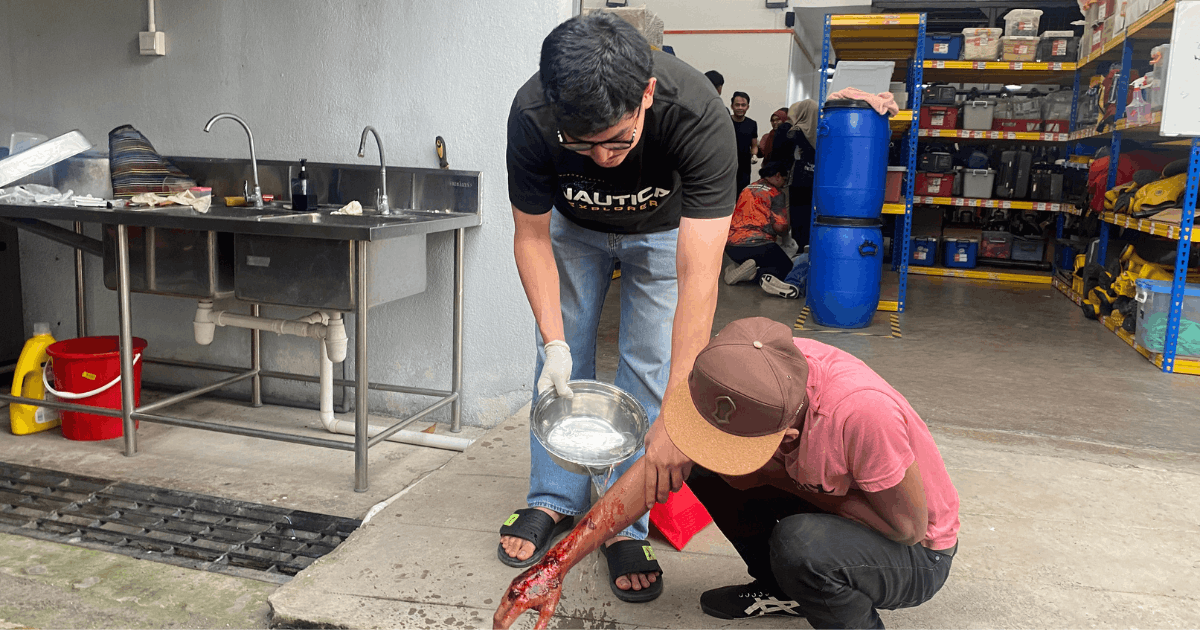
Refineries present unique trauma risks, including high-pressure injection injuries and chemical burns. A comprehensive first aid training Malaysia programme equips workers with the skills to manage severe bleeding and stabilise fractures until a MEDEVAC is organised. Understanding wound care in a tropical environment is equally essential for preventing secondary infections.
Integration with Emergency Response Teams
Safety in the oil and gas industry relies on the seamless coordination of all safety units. Whilst every worker receives foundational instruction, the Emergency Response Team (ERT) undergoes far more rigorous preparation. Pairing first aid training Malaysia with structured emergency response planning training ensures team leaders can maintain order during the chaos of an industrial accident, delivering medical care even whilst managing concurrent fire or chemical hazards.
Command and Control in Crisis
An ERT leader must delegate tasks clearly and communicate effectively with mainland medical directors. The information relayed by the first responder is vital for the medical team awaiting the casualty onshore.
- Establish a clear perimeter to ensure responder safety.
- Designate specific roles for compressions, airway management, and AED operation.
- Use a standardised reporting format to relay vital signs accurately.
- Manage bystander stress to keep evacuation routes clear.
- Conduct a post-incident debrief to identify areas for protocol improvement.
Specialised Training for Hazardous Zones
In areas where toxic gases such as hydrogen sulphide (H₂S) are present, medical response must incorporate atmospheric safety procedures. Responders are trained to perform life support whilst utilising breathing apparatus, a dual competency built on solid HazMat response training that is a cornerstone of occupational first aid in the petrochemical industry, where the environment itself poses as great a danger as the injury.
Regulatory Compliance and Safety Standards
Adhering to national safety standards is mandatory for Malaysian energy operators. As highlighted in PETRONAS’ latest offshore safety framework, the industry’s commitment to stronger HSE standards and regulatory compliance continues to evolve. Maintaining a regular first aid training schedule ensures companies remain aligned with the Occupational Safety and Health Act 1994, thereby avoiding legal penalties and protecting workers.
For companies operating across multiple sites, investing in quality first aid training in Malaysia also demonstrates a proactive approach to duty of care, something that regulators, insurers, and workforce representatives increasingly expect.
Maintaining Certification and Muscle Memory
Medical guidelines are updated periodically, making regular refresher courses essential. Most certifications are valid for three years, but many firms opt for annual reviews. Utilising resources such as digital learning modules and on-site drills helps maintain muscle memory, ensuring workers do not hesitate when a real emergency occurs.
- Schedule refresher sessions at least six months before certificate expiry.
- Conduct unannounced medical emergency drills for the crew.
- Update first aid kits monthly to ensure supplies remain sterile and in date.
- Review the latest resuscitation guidelines for any changes in technique.
- Record all training hours in a centralised management system.
Impact on Insurance and Risk Management
Insurance providers for high-risk industries look favourably upon organisations that invest in medical training. Demonstrating preparedness reduces the perceived risk of long-term disability claims. This proactive approach leads to more competitive premium rates and a stronger industry reputation, proving that safety is not just a moral obligation, but a sound business investment.
Frequently Asked Questions
Here are common questions about first aid training we often receive:
Conclusion
The growing emphasis on first aid training within oil and gas safety programmes reflects a broader shift towards building a truly resilient workforce. By ensuring every team member can respond effectively during a medical crisis, energy companies create safer environments for remote operations. These life-saving skills are the ultimate safeguard for the men and women who power our nation.
The benefits of these programmes extend well beyond regulatory compliance. They foster a culture of mutual care and accountability. As technology continues to transform how we extract and process resources, the human element of safety remains the most important factor in operational success. Organisations that prioritise medical readiness are far better equipped to protect their most valuable assets: their people.
If you are ready to enhance your organisation's safety culture, get in touch with our team to explore specialised first aid training in Malaysia programmes designed specifically for the energy sector, and ensure your team is fully prepared for the challenges of tomorrow.