Have you ever witnessed an accident in a crowded place and noticed that nobody stepped forward to help? This phenomenon, known as the bystander effect, occurs when individuals are less likely to offer help to a victim because they assume someone else will take charge. This psychological pressure leads to a dangerous delay in medical intervention. Enrolling in a first aid course is the most effective way to break this cycle of hesitation and ensure you possess the readiness to act.
The hesitation to help often stems from a fear of making the situation worse. By engaging in all training opportunities, individuals can replace that fear with clinical knowledge and muscle memory. When you understand exactly what needs to be done, the presence of a crowd no longer becomes a barrier but rather a resource you can manage to provide better care for the casualty.
Being a first aider is about having the mental strength to stand out and take responsibility for another person’s safety. A comprehensive first aid course provides the technical foundation required to transform a passive observer into a proactive lifesaver, fostering a safer community for everyone.
Why People Hesitate During Emergencies
Understanding why we freeze during a crisis is the first step toward change. The bystander effect is rooted in the diffusion of responsibility, where the presence of others makes us feel less personally accountable. A professional first aid course addresses these psychological hurdles by teaching students how to identify an emergency and claim ownership of the rescue process immediately.
Identifying the Barriers to Action
Many people worry about legal repercussions or contracting a disease while helping a stranger. During a first aid course, instructors clarify these myths by explaining the importance of personal protective equipment. Once these external fears are addressed, the focus shifts to the internal confidence needed to step forward.
- Recognize the emergency by looking for unusual sights or behaviours.
- Overcome the fear of social judgment by focusing on the victim.
- Assess the scene for personal safety before approaching the casualty.
- Delegate specific tasks to bystanders to reduce the diffusion of responsibility.
- Provide clear instructions to others to call for professional medical help.
The Power of Decision Making
Making a swift decision is often the hardest part of a rescue. Training centres like ASEC focus on repetitive drills that help students make fast, accurate assessments. This practical experience ensures that when you are faced with a real world scenario, your brain defaults to the steps learned in your first aid training rather than becoming paralyzed by the surrounding environment.
The Role of Confidence in Emergency Response
Confidence is the antidote to the bystander effect. When you attend a first aid course, you are building the belief that your actions can change a tragic outcome. This self assurance allows you to push past the initial shock of an accident and begin the life saving process before professional paramedics arrive.
Building Competence Through Practice
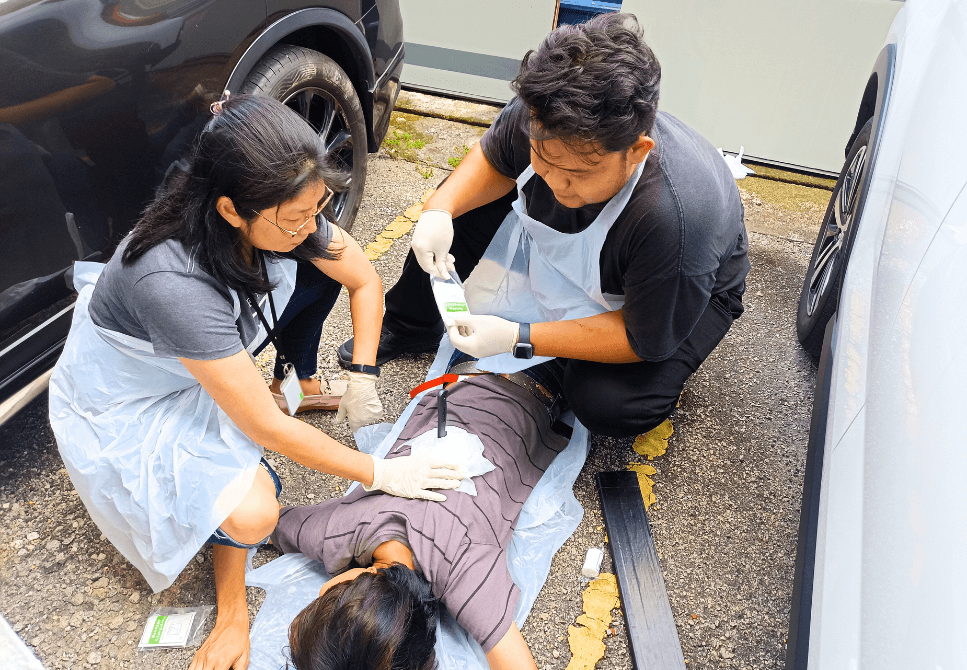
A high quality first aid course utilizes manikins to replicate the stress of a real emergency. This hands on approach bridges the gap between theoretical knowledge and practical application. Professional providers like ASEC offer specialized modules such as basic occupational first aid designed to help employees take charge in workplace accidents where the pressure to perform is high.
- Practice chest compressions on manikins to master the correct rhythm.
- Simulate various wound types to learn effective bleeding control.
- Role play communication strategies to keep casualties calm.
- Demonstrate the use of medical equipment in a supervised environment.
- Reiterate the importance of clear reporting during the handover to medics.
Transforming Fear into Action
Relatable scenarios, such as a colleague choking or a family member suffering a fall, help students see the immediate value of their training. The course breaks down interventions into simple, manageable steps. This structured approach is what allows trained individuals to act decisively while others remain frozen by indecision.
Technical Skills That Empower the Responder
The technical skills gained in a first aid course provide the actual tools for survival. Knowing exactly how to restart a heart or clear an airway gives the responder a sense of purpose. When you have a “tool kit” of skills, you are far more likely to step into the fray because you know you have something valuable to contribute.
Mastering Life Saving Equipment
Modern technology has made it easier for non medical professionals to save lives. For instance, knowing how to operate an AED can increase the chances of survival for a cardiac arrest victim significantly. A first aid course ensures you are comfortable with these devices, removing the intimidation factor of using medical machinery during a high stress event.
- Turn on the device and follow the automated voice prompts.
- Attach the electrode pads to the casualty’s bare chest.
- Ensure no one is touching the casualty while the device analyzes.
- Deliver a shock only if the device instructs you to do so.
- Resume CPR immediately after the shock or if no shock is advised.
Adapting to Different Environments
Whether you are in an office or a remote trail, the principles of first aid remain the same. However, a specialized first aid course might teach you how to adapt these skills to more challenging environments. This adaptability is key to overcoming the bystander effect because it prepares you for the unexpected, ensuring you never feel out of your depth.
Frequently Asked Questions
Here are common questions about first aid course we often receive:
Conclusion
Overcoming the bystander effect is a powerful byproduct of attending a first aid course. By replacing hesitation with confidence, you become a pillar of strength in your community. The decision to step forward and help a person in need is a decision that becomes much easier when you are properly prepared.
The long term benefits of widespread training cannot be overstated. When more people are trained to act, the collective safety of society increases. According to the Malaysian Red Crescent, having a first aider in every home and workplace is a vital goal for national resilience and public health.
If you are ready to move from being a bystander to a lifesaver, the next step is finding the right training programme. We invite you to learn more about us and our mission to empower individuals with the skills to make a difference. Taking the time to invest in your training today could save a life tomorrow.